Scientific Chicago

For the curious-minded Chicagoan

Main Menu

Skip to content
  • About
  • Contact

Category Archives: How Things Work

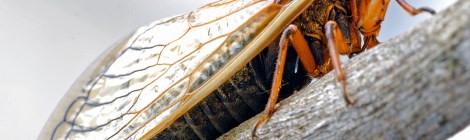
Why is the U.S. Navy interested in Cicadas?

June 4, 2013by Lindsey Reiser 1 Comment

It turns out the swarms of loud, creepy insects serve a human purpose beyond frying those tasty little suckers in butter. When the Brood II cicadas emerge in the northeastern […]
Read Article →
Animals, How Things Work, Science News, Technology

The lifelong self-experiment of Santorius Santorius

April 2, 2013by Lindsey Reiser Leave a comment

Throughout history, certain scientists have solved the moral dilemma of experimenting on animals by turning themselves into guinea pigs instead. While this might not be the safest or even the […]

Read Article →
How Things Work, Medicine, Science History

Probably the cutest Kickstarter yet

March 19, 2013by Lindsey Reiser Leave a comment

What good is science if it doesn’t inspire the younger generations? Not much good at all, really, which is why this fourth grade class from North Carolina is positively joy-inducing. […]

Read Article →
How Things Work, Our Environment, Science News, Technology

A vortex of a different stripe

March 5, 2013by Lindsey Reiser Leave a comment

…or rather, a different configuration. University of Chicago researchers Dustin Kleckner and William Irvine created a vortex that’s the first of its kind to be seen in a lab: A […]

Read Article →
How Things Work, Physics, Science in Chicago, Science News

That’s so cute I could punch you

January 25, 2013by Lindsey Reiser Leave a comment

A fellow driver flipping you a choice finger or someone cutting in line at the DMV might make you feel a wee bit aggressive. But did you know a fluffy, […]
Read Article →
Animals, How Things Work, Science News

When is a kilogram not a kilogram?

January 7, 2013by Lindsey Reiser Leave a comment

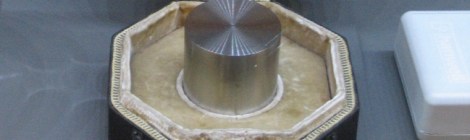
The standard kilogram is not simply a number. It’s an object; a 130-year-old cylinder of platinum and iridium that weighs exactly one kilogram, has 40 replicas, and is stored in […]
Read Article →
How Things Work, Physics, Science News

How we taste with our eyes

January 3, 2013by Lindsey Reiser Leave a comment

Some people might scoff at the concept of “presentation” when it comes to food. But the fact is, looks matter. Even the color of the plate or cup can change […]
Read Article →
How Things Work, Nutrition, Science News

Pitcher plant kills by slipperyness

December 20, 2012by Lindsey Reiser Leave a comment

The pitcher plant Heliamphora nutans puts the Sarlacc to shame; this carnivorous plant kills more efficiently and with considerably less effort. Researchers have been studying the physical properties of the plant […]

Read Article →
Botany, How Things Work, Science News

The science of snow

December 20, 2012by Lindsey Reiser Leave a comment

Since we’re supposed to be hit with the white fluffy stuff this evening, we may as well be prepared. And I don’t mean with boots, shovels and a choice selection […]

Read Article →
How Things Work, Nature

Want more foam in your beer? There’s a gene for that

November 9, 2012by Lindsey Reiser Leave a comment

Some would argue that beer-making is an art (it certainly produces art in many instances), but brewers know there’s a definitely science at work as well. And now one more element […]

Read Article →
Chemistry, How Things Work, Science News

Post navigation

1 2 Next →

Scientific Chicago on Facebook

Scientific Chicago on Facebook

Scientific Chicago on Twitter

Tweets by chiscience

Recent Posts

  • Why is the U.S. Navy interested in Cicadas?
  • The lifelong self-experiment of Santorius Santorius
  • Moon or frying pan?
  • The oldest light in the universe gets its closeup
  • Car traffic driving micro-evolution?

Archives

  • June 2013
  • April 2013
  • March 2013
  • February 2013
  • January 2013
  • December 2012
  • November 2012
  • October 2012
  • September 2012

Categories

  • Animals
  • Anthropology
  • Behavior
  • Botany
  • Chemistry
  • Ecology
  • Evolution
  • Genetics
  • Geology
  • Health
  • How Things Work
  • Medicine
  • Natural History
  • Nature
  • Nutrition
  • Our Environment
  • Physics
  • Science History
  • Science in Chicago
  • Science News
  • Space
  • Technology
  • Uncategorized
  • Weather
  • Weird Science

RSS NBC Science News

  • An error has occurred; the feed is probably down. Try again later.

RSS Scientific American

  • Here’s How Much Practice You Need to Become the Best in the World
  • Trump Administration Moves to Severely Curtail Access to Gender-Affirming Care for Minors
  • Satellites Used to Have Months to Avoid Collisions—Now They Have Days
  • Two Möbius Strips Combine to Create a Bizarre Object That Only Exists in 4D
  • Igloos on Mars? How Future Astronauts Could Use Ice to Survive
  • 10 Mind-Blowing Brain Discoveries from 2025
  • Excerpt—The Great Shadow, by Susan Wise Bauer
  • Jared Isaacman Confirmed to Head NASA at Pivotal Moment for the Space Agency
  • Scientists Are Baffled by This Bizarre Lemon-Shaped Exoplanet
  • New Views of Saturn’s Moon Titan and Jupiter’s Moon Europa Complicate Ocean Worlds Theory

RSS TIME Science

  • Don’t Confuse Me With Facts: When Misinformation Kills
  • A Bright Year for Solar in the U.S.—But There Are Clouds on the Horizon
  • Famous Scientist Will Make You Smart. Click Here
  • Window on Infinity: From Saturn to Mars to Deep Space to Home
  • Our Global Diet Is Becoming Increasingly Homogenized—and That’s Risky
  • Cosmos Reboot: Geek TV at Its Very Best
  • Virus Resurrected After Chilling in Siberia for 30,000 years
  • How to Know If Someone’s Really Dead
  • Thanks to Climate Change, West Nile Virus Could Be Your New Neighbor
  • This Is What Life Is Like From a Shark’s Perspective

RSS Museum of Science and Industry blog

  • An error has occurred; the feed is probably down. Try again later.

RSS BBC Science and Environment News

  • Sir David Attenborough's London - why he wouldn't live anywhere else
  • Farmers 'bewildered and frightened' over inheritance tax, report finds
  • Archaeologists uncover 3,000-year-old mysterious mass burial site
  • Government rolls back nature protections to boost housing
  • Workers were exposed to toxic chemicals in firefighting foam
  • Spain's commitment to renewable energy may be in doubt
  • Geminid meteor shower set to light up sky during weekend peak
  • Mayor says too many families are 'working poor'
  • What in the World
  • COP30: Five key takeaways from a deeply divisive climate summit

Blogroll

  • Bill Nye the Science Guy
  • Grist Climate & Energy
  • National Geographic
  • Nature
  • NBC Science
  • PBS Nature
  • Popular Science
  • Scientific American
  • Wired Science

Meta

  • Create account
  • Log in
Create a free website or blog at WordPress.com.
Scientific Chicago
Blog at WordPress.com.
Privacy & Cookies: This site uses cookies. By continuing to use this website, you agree to their use.
To find out more, including how to control cookies, see here: Cookie Policy
  • Subscribe Subscribed
    • Scientific Chicago
    • Join 72 other subscribers
    • Already have a WordPress.com account? Log in now.
    • Scientific Chicago
    • Subscribe Subscribed
    • Sign up
    • Log in
    • Report this content
    • View site in Reader
    • Manage subscriptions
    • Collapse this bar
 

Loading Comments...